United Kingdom
We are facilitating an exploration that asks: what does care look like when it is not a response to harm? And how might we resource proactive care practices that prefigure the world we long for?
Design & Implementation
$25,000.00
Last update: October 05, 2023
In creating an enabling environment for global justice movements, narrative workers consistently expose and are exposed to immense pain and trauma. Yet, they also illuminate the beauty of our world, celebrate our victories, and inspire hope and healing. Through the work they produce and how they produce it, narrative workers are practitioners of care.
When narrative work is positioned primarily as a response to urgent crises, there is little space to deliberately develop proactive frameworks and methodologies of care-making. For movements, the cycle of reactivity is a familiar trap of resource extraction that comes with habitual behaviors that allow harm to take place.
But what if our point of entry to care wasn’t from a place of harm and deficit thinking? What can we gain from narrative interventions that reorient our actions around care practices that assume (and, therefore, prefigure) our right to pleasure, leisure, and well-being? What if we behaved as though giving and receiving resource in the form of care is a joyful responsibility that sustains our movement ecology?
By resourcing care practices and care practitioners, we aim to reveal the ways care is and must be a fundamental component of narrative work, rather than an afterthought. In receiving care, narrative workers are able to better position themselves (and the rest of us) as people who not only bear witness to the brokenness of our world, but who can repair what is broken and build a better future.
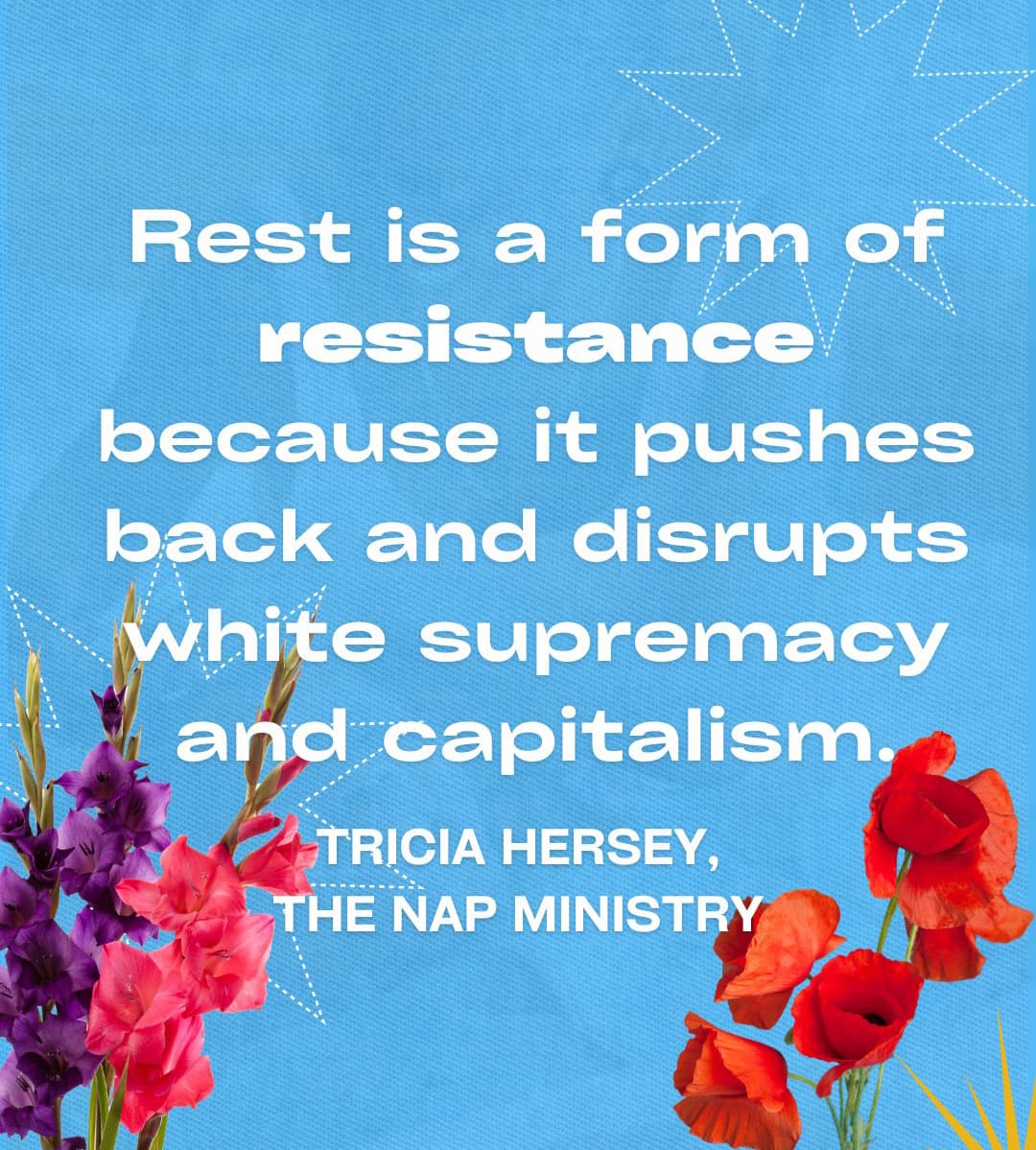
This funding and learning collaboration seeks to promote the right to leisure/pleasure for narrative workers who contribute to global justice movements and examine the value of rest in the context of everyday, mundane, unglamorous ways of thinking, feeling, and being that move us toward systemic transformation. It is an experiment in collective and co-creative methods, practices, and approaches that challenge deeply held beliefs about care and resource, identify and articulate what collective care looks like and where it is needed, and provide insights on how to fund practices in ways that build shared structures that enable care as a critical resource.
Resourcing care for narrative workers intervenes in dominant structures that are built on hierarchies of care, and makes space for logics and practices to emerge that are decolonial, community-driven, local, and contextual. Though they are likely to have common origins and orientations, care practices are expected and encouraged to be distinct for different people in different places.
In Year One (2025), we facilitated a ‘learn-by-doing’ co-design process in which 10 narrative workers who contribute to global justice movements were each given €2,500 in unrestricted funding to participate in a Rest Residency that enabled them to ‘pause’ in a self-determined way. The Rest Residents/co-designers were selected by lottery (in acknowledgement that everyone is deserving of care) from a pool of nominees that was generated by the organizing team in alignment with a set of eligibility/ineligibility criteria. Participants in this pilot phase were from places as distinct as Palestine, Kenya, India, Indonesia, Mexico, the Philippines, the United Kingdom, and the United States.
The process began with a Design Session in which co-designers cultivated relationships with each other and the organizing team, surfaced enabling and disabling conditions for proactive care practices on individual and collective levels in a movement context, shared ideas on how they might engage in the Rest Residency and what they hoped it might allow for them and their communities, and offered initial thinking and ideation on the design of a Pause Fund.
Following the Rest Residency, the co-designers reconvened for a Reflection Session where they engaged in collective sensemaking through story sharing; conversation about insights, questions, and realizations that emerged during the experience; and intention setting around how to integrate new learning and build on the proactive care practices they’d begun adopting moving forward. The session also included grounded recommendations for process refinements that will carry forward the intentionality, care, and depth of the experience for future Rest Residents.
At this point, we would like to publicly share the details of the Rest Residents’ experiences in a story collection (Ten Ways to Pause Care-fully) that will provide practical examples of proactive care practices that are rooted in community and collectivity, begin to articulate a shared analysis of what care looks like when it is not a response to harm and in different global contexts, and invite resource stewards from institutional philanthropy into transformational methods for resourcing this vital aspect of movement infrastructure and worldbuilding that are generated by narrative workers operating in transformational movements.
We will also compile and make accessible a repository of care practices that strengthen communities, which narrative workers can use as a source of inspiration for the types of ‘pauses’ they might routinely take and that resource stewards can use to determine how to incorporate funding for this work in their own distribution approaches. Additionally, we will share our learning about the principles and practices for resourcing this work and considerations for what to avoid.
We have the various data compiled; we simply need resources to work together to synthesize and draft the content and then implement our dissemination strategy.



story collection, repository of care practices, guidance for resource stewards